
Hotels
Digital signage for hotels: what to show on screens during a guest's stay
A practical guide to using digital screens in hotels: content ideas for reception, spa, rooftop and restaurant depending on the time of day.
Showing the same content all day wastes your screens
Digital screens in a hotel shouldn't behave like fixed posters. A message that stays identical from 7 a.m. to midnight loses relevance: the guest coming down for breakfast doesn't need to see the dinner offer, and someone returning at night probably already knows the pool times. Digital signage for hotels works best when content is adapted to the time of day, the zone of the hotel, and what the guest is looking for at that moment. In this article, we walk through a typical day and explain what to show in each time slot so that the screens genuinely help, without overwhelming or repeating.
The right content for each time and place
Each screen has an audience and a moment. Reception accompanies arrival and departure; the spa invites relaxation; the restaurant guides on hours and dishes. If we mix messages without criteria, the screen becomes visual noise. Instead, if we think about what the guest needs in that location and at that time, the screen becomes useful. The key is to relate three variables: the time of day, where the screen is located, and the guest's primary need. In the morning, practical information rules; at midday, it's good to show services; in the afternoon, experiences; and at night, dining. It's not about filling the screen, but about choosing a few clear messages and changing them when needed.
Morning: practical information and breakfast
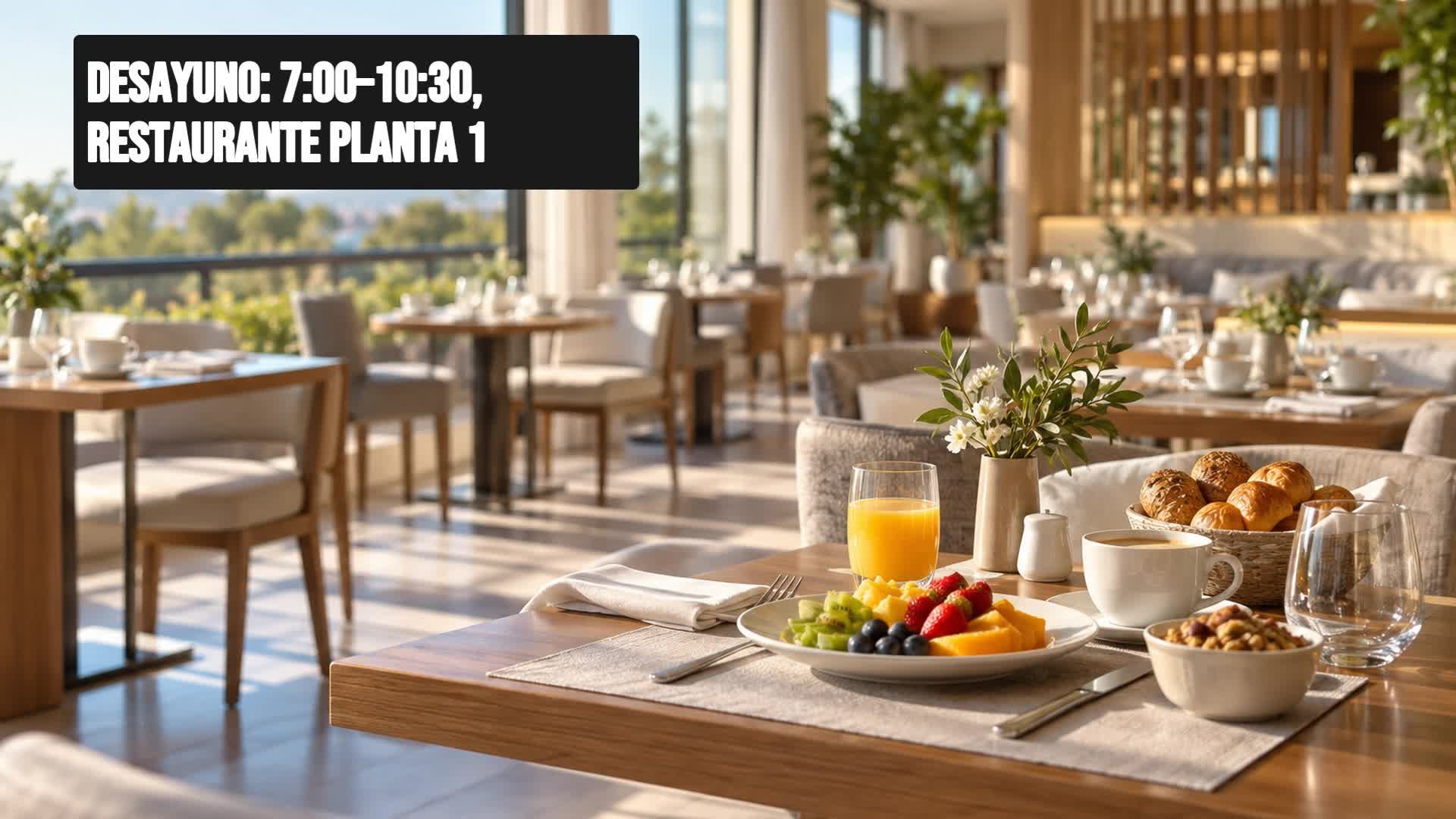
Between 7:00 and 10:30, for example, the reception screen or the one in the corridor towards the restaurant can show breakfast times and location, along with the weather forecast or check-out. The guest wants to start the day without asking. A message like 'Breakfast 7:00–10:30 · Restaurant Floor 1' answers a frequent query and avoids queues at reception. It also works to include a gentle reminder of departure times or the luggage storage service. Morning is a time for practical information, not promotions.
During the day: discover the hotel's services
Mid-morning and after lunch, the guest is more receptive to discovering services. Screens in common areas can present the spa, pool, gym or available experiences. For example, if the hotel offers a treatment like 'Ritual Relax' of 60 minutes for €79 with booking at reception, showing it on a screen near the lift or in the relaxation area can increase demand. The aim is to make known what the hotel already offers, without pushing. A clear message and an indication of how to book is enough.
In the afternoon: experiences that invite guests to stay
From 17:00 onwards, attention shifts towards leisure and socialising. If the hotel has a rooftop or terrace, this is the moment to promote it. A message like 'Sunset Rooftop · today 19:30' creates anticipation and suggests a plan. Screens can alternate this type of invitation with information about upcoming activities, happy hour times or recommended routes. The afternoon is ideal for showcasing experiences that invite the guest to stay in the hotel instead of looking for options outside.
At night: dining takes centre stage
From 20:00 onwards, dining should take the spotlight. Screens in the lobby, corridors and lifts can show the restaurant menu, dinner times and how to book. For example: 'Mediterranean Dinner · Menu €32 · Book your table'. This type of message not only informs but can also boost last-minute reservations. In addition, chef's recommendations or seasonal dishes can be included. Night closes the day's cycle with a concrete proposal.
Examples of content for a day at the hotel
Schedule your content and forget about changing posters
Changing the posters on each screen several times a day would be unfeasible if it had to be done manually. That's why it's best to prepare content in advance and schedule it to publish automatically at the defined times. This way, each screen shows the right message without staff intervention, and the reception team doesn't have to worry about updating notice boards. Scheduling also makes it possible to coordinate multiple screens at once and maintain a consistent visual identity throughout the hotel. It saves time and avoids mistakes.
iMediaGO: a solution to coordinate your screens
iMediaGO fits naturally into this workflow: it allows you to create, organise and schedule content for the different hotel screens from a single platform. Instead of designing each message separately or manually updating the players, you can prepare the sequence of the day —breakfast, spa, rooftop, dinner— and schedule when it should appear in each zone. So the reception screen won't show the dinner offer at 9 in the morning and the spa screen won't announce breakfast. The result is more organised, relevant and easy-to-manage communication.
Create content for your hotel screens with iMediaGO
Organise, schedule and adapt messages for each screen and time of day from a single platform.