
Marketing and hospitality
Restaurant marketing in September: how to attract customers and reactivate sales
September changes the rhythm of a restaurant. It is a good time to review what you want to communicate, regain visibility and coordinate the messages that accompany the customer from discovering your restaurant to sitting down at the table.
Why September deserves its own marketing strategy
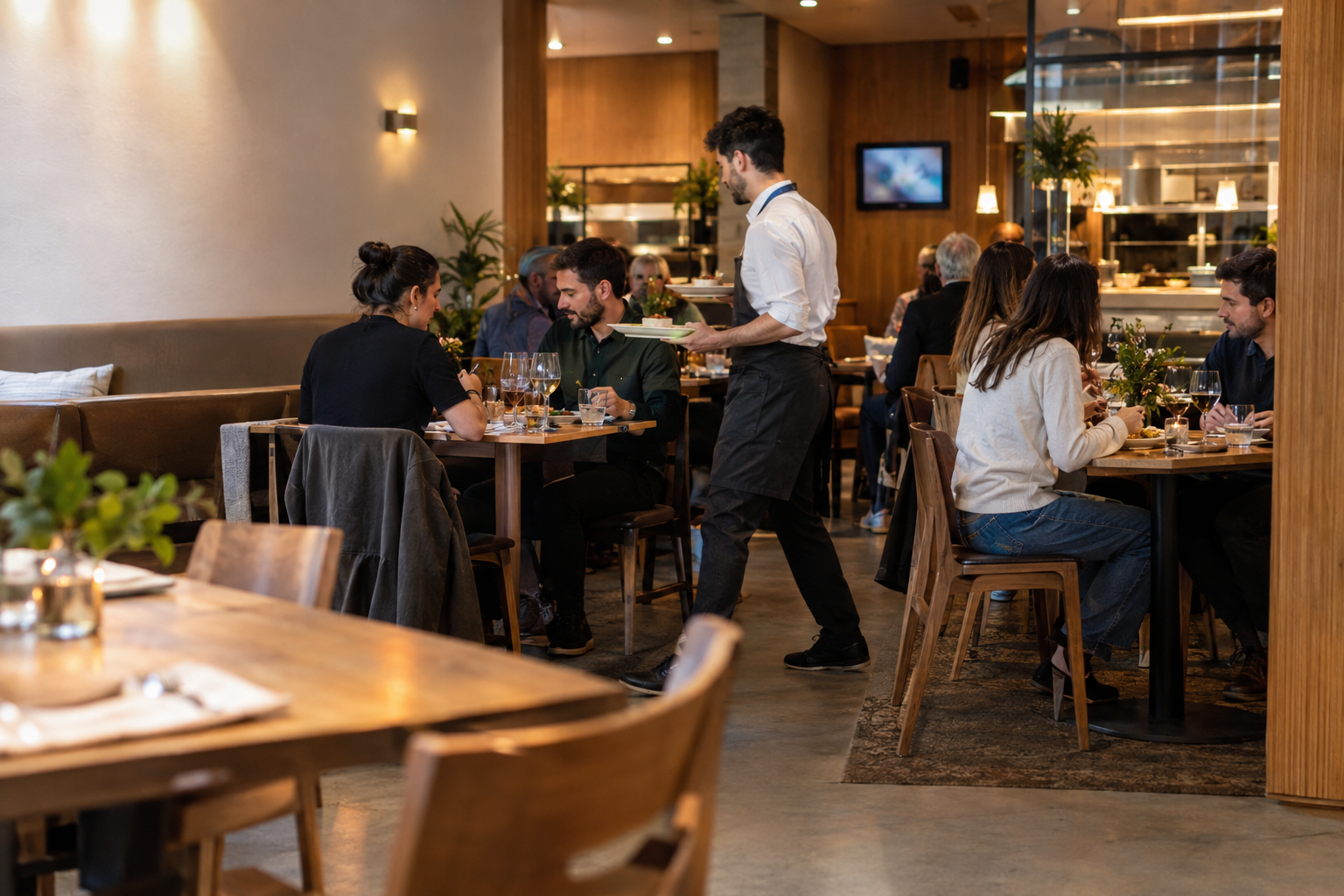
September marks a change of pace. After the summer, a restaurant may encounter different consumption habits, customers returning to their routines and a renewed need to regain attention. That is why restaurant marketing in September should not be limited to increasing how often you post on social media. The first question is simpler and more useful: what does the customer need to understand or remember again about your restaurant? The answer could relate to your proposition, a new addition, a particular experience or simply a reason to visit you again. This seasonal change is also an opportunity to review what you are already doing. Check whether your digital channels are still communicating the same message, whether the information needed to visit or book is clear and whether your restaurant's communication remains consistent as the customer moves from the digital environment into the physical space. The opportunity lies in working on the complete customer journey. Discovery, consideration, visit and consumption are not isolated moments: they are part of the same experience. September can help you organise that experience and focus your efforts on a few actions with a clear purpose.
1. Start with a clear proposition for your customer
Before thinking about posts, campaigns or screens, define what you want the customer to remember. A restaurant marketing strategy becomes clearer when it starts with a specific proposition and an audience you genuinely want to attract. Rather than simply communicating that your restaurant is open or serves good food, look for a message that explains why someone has a reason to choose you now. It could be something new on the menu, a particular experience, a product you want to highlight or a feature of your proposition that deserves to take centre stage again. The next step is to turn that idea into a simple message. If the team cannot explain in a few words what you want to communicate, the customer probably will not perceive it clearly either. The same proposition should be adaptable across different channels without losing its meaning. A practical way to start is to write down three elements: who you want to attract, what you want them to know or remember and what action you expect them to take. With that foundation, it becomes easier to decide which content deserves attention and which communications can wait.
2. Regain your digital visibility
To attract customers to a restaurant, you first need to make it easy for them to find you and make a decision. Your September review should include the main digital touchpoints your business uses. Start with your local presence. Check that the essential information about your restaurant is clear and consistent on your Google Business Profile and in other places where a customer might search for you. Review your website too: location, opening hours, proposition, menu where relevant and booking options should be easy to find and understand. Then review your social media with one specific question: does what a person sees there help them decide whether they want to visit you? Not everything needs to become a promotion. Showing products, atmosphere, new additions or relevant aspects of the experience can help build a more complete picture of the restaurant. Finally, check the journey through to booking or visiting. Content can attract attention and still lose value if the next step is unclear. Digital marketing for restaurants works better when it reduces the distance between discovering the venue and being able to take action.
3. Turn communication into a reason to visit the restaurant
Visibility on its own does not guarantee a visit. For communication to contribute to demand, it needs to give the customer a concrete reason to pay attention and consider the restaurant. September is a good time to select what deserves to take centre stage for a specific period. A new addition, a dish, an experience or a timely message can become a point of interest if it is presented clearly and fits the venue's proposition. For example, if you want to give prominence to a particular burger, the communication can focus on what makes it recognisable and why it is worth discovering. In this case, a product such as La Clásica Ahumada can be communicated around its main elements: beef, cheddar cheese, caramelised onion and smoked sauce. The key is not to pile on information, but to build a message that lets customers quickly identify what you want to highlight. It is also worth distinguishing between communicating something new and overwhelming the customer with messages. A more manageable strategy is to choose a small number of communication priorities, give them enough presence and then review whether they are still relevant. This way, content stops being a sequence of posts and becomes part of a specific commercial intention.
4. Don't stop communicating when the customer walks in
The customer journey continues inside the restaurant. Once someone has walked in, communication can still help present products, guide their attention and reinforce messages that form part of the experience. This is where restaurant communication comes into play, particularly digital signage for restaurants. A screen placed in a physical space can bring visual messages to where the customer already is, meaning the strategy does not depend solely on having captured their attention before the visit. The important question is which message deserves that space. It may make sense to highlight something you want the customer to discover at that moment, present a new addition or reinforce a timely message. Communication should be easy to read and consistent with the restaurant's tone and proposition. Thinking of the point of sale as an extension of the strategy helps avoid an artificial separation between marketing and experience. A message that starts outside can continue inside, adapted to the moment when the customer is already making consumption decisions. Digital signage does not replace the rest of your restaurant marketing; it adds another touchpoint to the journey.
5. How to prioritise your September marketing plan
You do not need to turn September into an endless to-do list. To make the plan practical, it helps to organise decisions into a simple sequence: objective, message, channel, execution and measurement. First, define a specific objective. It could be to regain visibility, generate more visits, give prominence to a product or reactivate the relationship with certain customers. Then choose the message that best responds to that objective. If too many messages are competing with each other, prioritise. Next, select the channels you can realistically maintain. Social media, local presence, website, bookings and communication inside the restaurant can serve different purposes. You do not need to do the same thing across all of them. Adapt the message to the moment and the behaviour you expect from the customer. During execution, establish what is being communicated, for how long and who is responsible for keeping it up to date. Finally, review signals that help you assess the effort: engagement with content, enquiries, bookings, responses to specific messages or any other indicator you already use in your management. The purpose of measurement is not to fill a spreadsheet with data, but to decide what is worth keeping, adjusting or stopping. A September plan can therefore be summed up with one question for each stage: what do I want to achieve, what do I want to say, where will I say it, how will I maintain it and what will I look at to know whether it is worth continuing?
Where iMediaGO fits in
Within this journey, iMediaGO can serve as a specific part of digital communication inside the restaurant. Its role is not to replace your marketing strategy, digital presence or efforts to attract customers, but to help bring visual messages into the physical space where the customer already is. This function is particularly relevant when a restaurant wants to maintain more dynamic communication within its own venue. Instead of viewing the screen as a standalone element, it can be understood as another channel within a broader strategy: the message is discovered outside, reinforced during the visit and becomes part of a coherent communication experience. The decision to use digital signage should, like the rest of the plan, start with a specific need. First define what you want to communicate and why; then decide whether a screen inside the restaurant is an appropriate channel for that message. This approach keeps technology in its proper place: as a tool in service of communication. The priority remains giving the customer a clear, relevant message connected to the restaurant's proposition.
Demo campaign
Bring your communication inside the restaurant
Discover how iMediaGO can help you bring more dynamic digital communication into your restaurant space.