
Entertainment
Where to Place Digital Signage Screens in a Leisure Centre
A well-placed screen can help visitors find their way, locate services and understand where to go next. But each area of a leisure centre has different needs. Follow the visitor journey to discover where digital signage can be most useful, what each location should achieve and how to position screens without disrupting movement around the venue.



Why screen placement matters more than simply being visible
A screen is useful when visitors can see it where they actually need to make a decision.
Visitors move through entrances, reception areas, activity spaces and other facilities, often without knowing the layout. At each point, they face a different question: where to enter, which way to turn or how to reach a particular area. Digital signage placement should therefore start with the visitor journey, not simply with finding an empty wall.
A screen outside someone's natural line of sight may be overlooked. Another placed in a narrow passage could encourage people to stop where others need to walk. Effective positioning brings together visibility, purpose and ease of movement.
The aim is not to install screens everywhere. It is to identify the locations where a visual reference makes navigating the venue easier.
Identify the key decision points in the visitor journey
Walk through your venue as if you were visiting for the first time. Pay particular attention to three types of location.
Arrival points
Entrances and service access points are where visitors first need to recognise their surroundings. A screen can provide a visible reference without competing with essential wayfinding signs.
Junctions and changes of direction
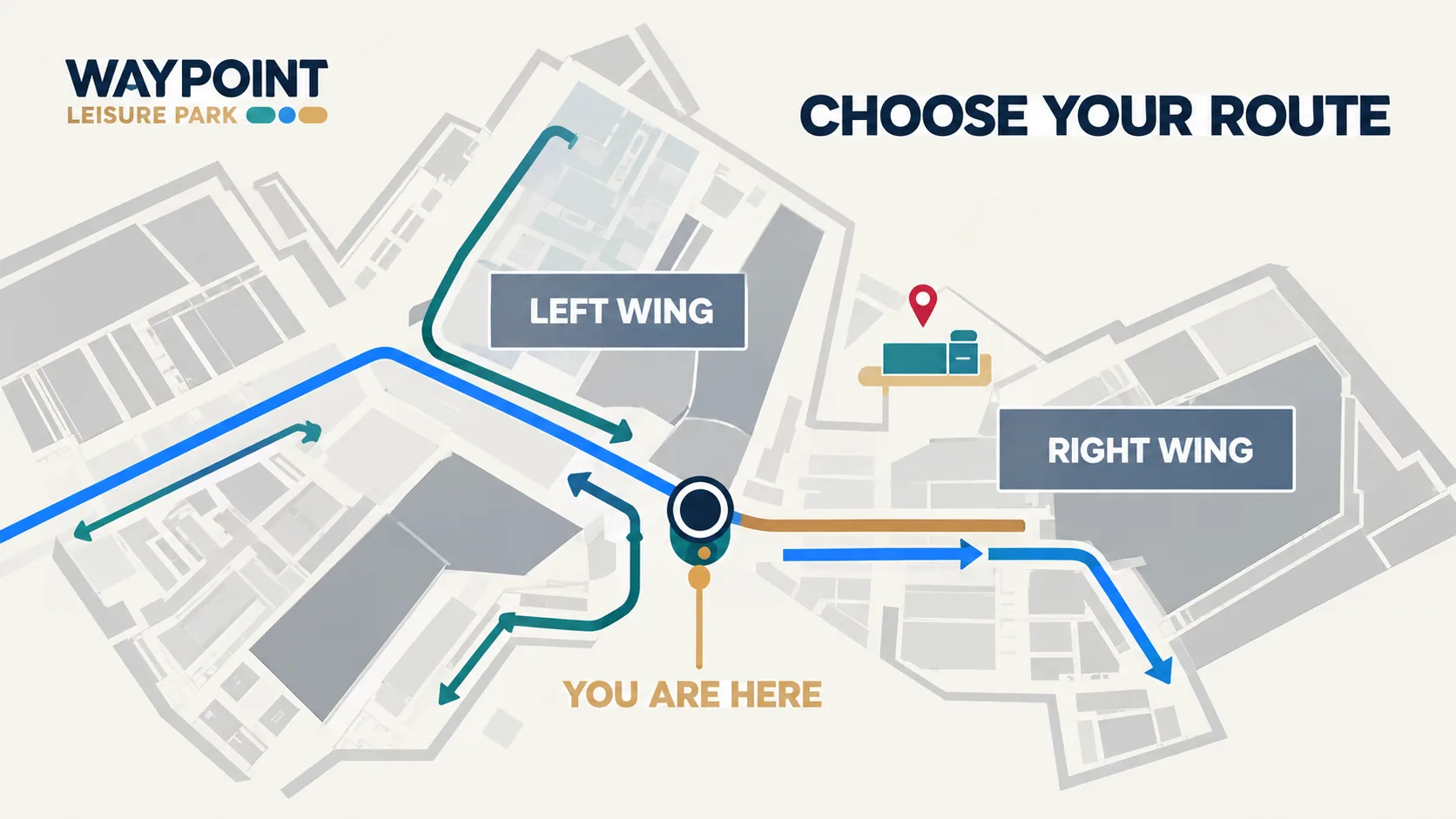
At intersections, branching corridors and entrances to different areas, a screen should be visible before visitors commit to a route. Position and viewing distance both matter.
Places where visitors pause
Reception areas, waiting spaces and lounges offer opportunities for more comfortable viewing. Screens should fit naturally without obstructing seating, service counters or circulation.
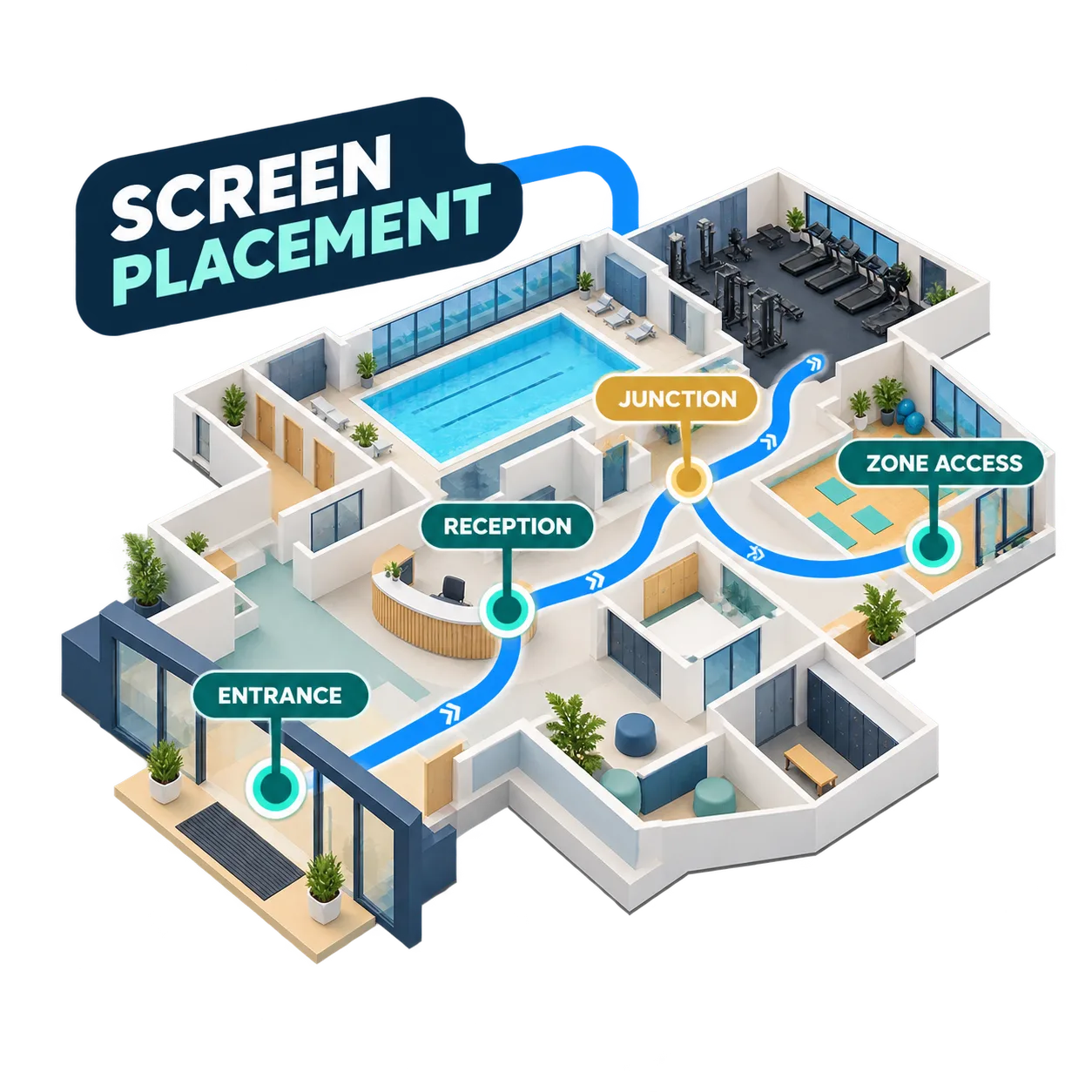
A simple floor plan, combined with observation of the main walking routes, can reveal these locations before any screen quantity is decided.
Where to position screens in each area of a leisure centre
Each screen should serve a clear purpose. These seven areas provide a practical starting point for planning digital signage throughout your leisure centre.
Entrance
Choose a position visible from the approach without obstructing doors or walking routes. The screen should help visitors recognise the venue and find their initial direction.
Reception
Position the screen where it can be seen when approaching the desk, without competing with staff or essential signs. Its role is to reinforce orientation at the service point.
Waiting areas
Use locations comfortably visible from seating and places where visitors remain. Avoid awkward viewing angles or positions that require people to turn repeatedly.
Corridors
Prioritise junctions, changes of direction and access points to other areas. One screen at a meaningful decision point may be more valuable than several along a straight corridor.
Activity areas
Place visual references near entrances and boundaries, away from active movement areas. Visitors should be able to consult them without interfering with activities.
Food and refreshments
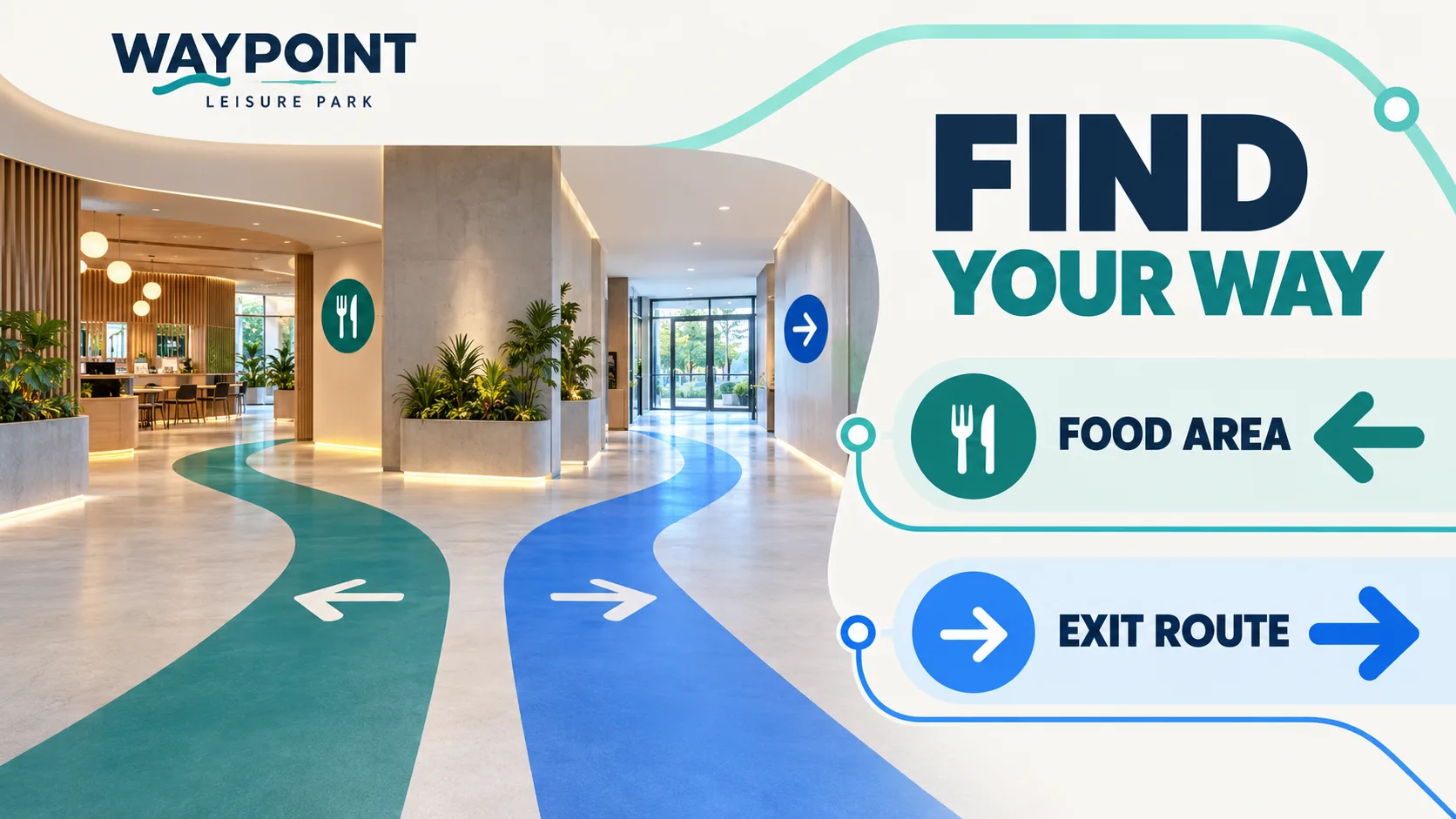
Look for positions near the service entrance or counter, visible without intruding on seating or walking routes. The screen should help visitors identify the service area.
Exit
Provide a recognisable reference along the departure route without covering, replacing or distracting from mandatory emergency exit signage.
Good screen placement makes sense from the visitor's perspective
Imagine entering a leisure centre for the first time. Can you identify the route to reception before reaching the desk? At a junction, can you see which corridor to take before making a turn? As you approach an activity area, can you find its entrance without stopping in the middle of the walkway?
This perspective changes the plan. Instead of distributing screens evenly across available walls, place them where visitors need guidance. Viewing distance, approach angle and room to pause all help determine the precise location.
What to check before choosing a screen location
A position that looks ideal on a floor plan may be unsuitable in practice. Check three essential conditions before confirming an installation point.
Visibility and readability
Consider viewing distance, approach angle, reflections and potential obstructions. Check how easily the screen can be seen from the actual walking route.
Circulation and accessibility
Keep doors, accessible routes, circulation areas and safety signs unobstructed. Mounting height and position must accommodate different visitors and comply with applicable accessibility and safety requirements.
Site conditions
Assess lighting, mounting suitability, power availability, maintenance access and environmental conditions. Technical feasibility should be confirmed before installation.
The best location is not necessarily the most prominent one. It is the position where information can be consulted comfortably, safely and naturally.
How to distribute screens without overcrowding the visitor route
More screens do not automatically mean better wayfinding
When several screens compete for attention along the same route, they can make the environment harder to understand. Repeating displays on consecutive walls does not guarantee that visitors will find a useful reference when they reach a decision point.
Start with entrances, junctions, access points and services. Then look for areas where visitors may lack clear visual guidance. Planning around actual spatial needs helps justify each installation and avoid unnecessary repetition.
Leave room for people to look, too. A screen should not encourage visitors to stop directly in front of a doorway, block a queue or narrow a circulation route. In busy areas, positioning it slightly away from the main flow may be more appropriate.
Every screen should have a clear spatial purpose. If two locations serve exactly the same need without adding clarity, reconsider the distribution.
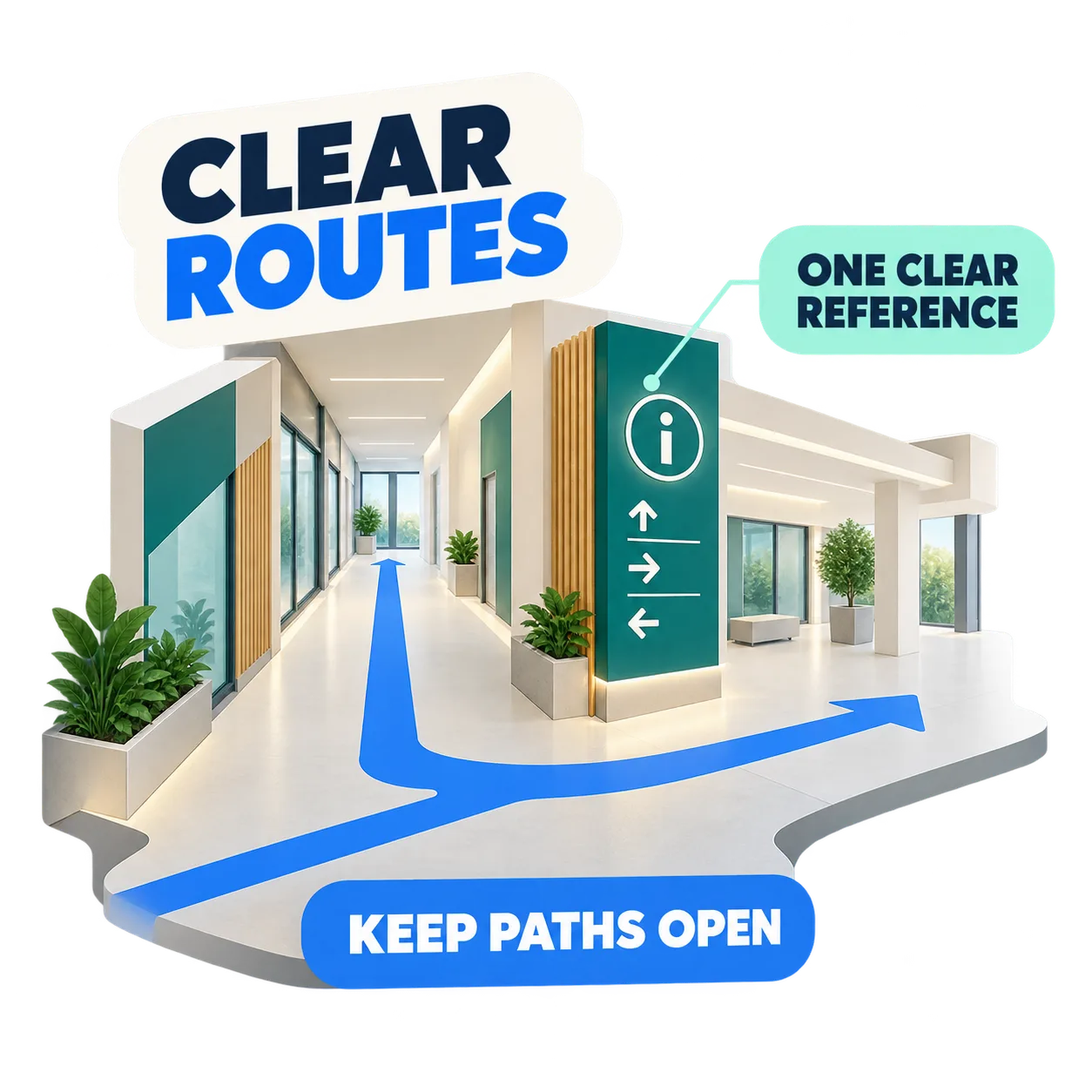
Turn your venue map into a practical screen placement plan
A practical digital signage plan starts with the routes visitors take and gives every proposed screen a clear purpose.
Map the main areas of the venue, identify entrances and decision points, and mark where a digital reference could be helpful. Then assess each proposed position for visibility, circulation, accessibility and technical suitability.
You do not need a screen in every area. You need to understand why each location deserves one and what visitor need it should address.
Once the locations are defined, a separate editorial decision follows: choosing the right information for those screens. That complements placement planning but should not be confused with it.
Once you know where your screens should go, explore what to display on screens in a leisure centre to make each communication point more useful to visitors.
Frequently asked questions about screen placement
Give every screen a meaningful place in the visitor experience
Thoughtful screen placement is the foundation of better communication across your leisure centre. Discover how iMediaGO can help you bring that communication to your screens.
Latest articles
Digital Signage for Auto Repair Shops: What to Show at Reception, in Waiting Areas and at Vehicle Collection

Digital signage in education: clear communication for students and visitors
What to Show on Restaurant Screens: 4 Practical Ideas
How to Design an Easy-to-Read Digital Restaurant Menu
Sunday Family Menu: How to Present an Offer Worth Sharing