
Marketing for restaurants
How to promote limited-time offers on restaurant screens
A limited-time offer works best on screen when the customer understands in seconds what is being offered, what its value is and until when they can take advantage of it. Discover how to structure that communication clearly and effectively.
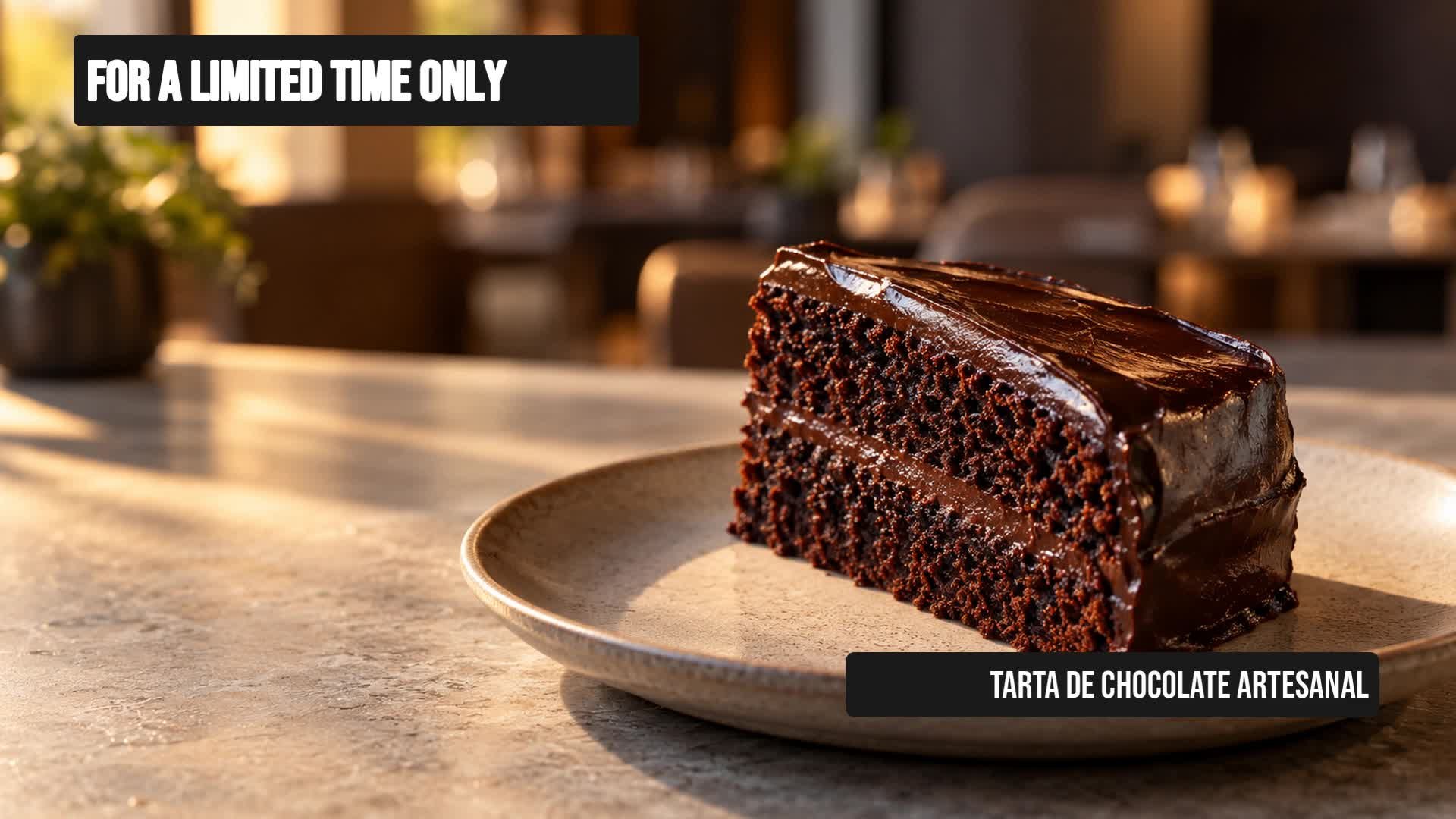
What makes a limited-time offer effective on screen
A temporary promotion on screen is not just a digital sign: it must capture attention, convey the value of the offer and generate a real sense of urgency. To achieve this, the offer has to be impossible to ignore and easy to understand at a glance.
The effectiveness depends on three pillars: clarity of the product, perceived value of the offer and evident time limitation. If any of these elements fails, the customer does not react. For example, an image of an appetising dish with the text "2-for-1 on desserts today only" is more effective than a list of promotions without hierarchy.
In addition, context matters: the screen should be placed where the customer is already thinking about eating or ordering, such as the entrance, the ordering area or near the counter. The offer should appear at the right moment, not permanently, so that the time limit retains its strength.
What the customer must understand in the first few seconds
The attention span of a customer in front of a screen is very short, often between 3 and 5 seconds. In that time, they must understand three things: what product is being offered, what is the concrete benefit of the offer and when it ends.
To achieve this, avoid overloading the screen with long text. A practical rule is to limit the message to one main sentence and one urgency cue. For example: "Special burger - 20% off - only until 22:00". The information is prioritised: the product first, the discount second and the time limit third.
The use of high-quality images and contrasting colours helps to direct the eye. The headline must be legible from a distance; the body text, minimal. If the customer has to strain to read, the offer loses impact.
How to combine product, offer and time limit
The visual combination of product, offer and time limit determines whether the promotion is understood or ignored. The product must be the protagonist: a sharp, appetising photograph. The offer must express the benefit directly, whether a discount, a gift or an exclusive advantage. The time limit must appear clearly, without ambiguity.
An effective structure is as follows: product image on one side, headline with the benefit on the other and an urgency tag ("today only", "last hours") in a corner. The three pieces of information must be visually connected through colours, typography or layout.
Avoid separating these elements into distant areas of the screen. If the customer sees the product first and then, on another screen, the discount, the association is lost. The limited-time offer demands coherence and immediacy.
How to communicate urgency without overloading the design
Urgency is a powerful motivator, but if it is overused, it loses credibility and becomes visually tiring. The goal is to convey that the offer is limited without turning the screen into an aggressive sales advert.
To achieve this, use subtle but clear visual elements: a countdown, a colour change on the screen border, a tag with the deadline. Red or orange can indicate urgency, but they should not dominate the entire design. Combine them with neutral colours so that the contrast highlights what matters.
The urgency text must be specific: instead of "for a limited time", it is better to say "until 21:00" or "last day". Specificity generates more trust and action. And remember: if the offer has no end date, it is not a limited-time offer.
Where and when to show a temporary promotion
The location and timing of the promotion on screen directly influence its performance. Not all areas of a restaurant have the same communicative value.
The best locations are those where the customer makes decisions: the entrance, the corridor to the dining room, the ordering counter and the waiting area. At those points, the customer has a few free seconds and can process the information.
Regarding timing, temporary promotions should be scheduled to coincide with peak periods or specific time slots of the day. For example, a dessert offer can be activated after meals, while a coffee promotion can be shown in the morning. Time scheduling allows the offer to be relevant and not wear out.
Mistakes that reduce the impact of a limited offer
Many on-screen promotions fail due to avoidable mistakes. Knowing them helps to design more effective campaigns.
One of the most common mistakes is showing too much information on a single screen. If the customer has to read a paragraph, the offer goes unnoticed. Another mistake is using a generic design, without visual hierarchy or contrast, which does not stand out from the environment.
It is also counterproductive to keep a "limited" offer for weeks or months. Urgency disappears and the customer stops trusting. Similarly, not scheduling the automatic removal of the promotion causes expired offers to appear, damaging the restaurant's credibility.
Finally, ignore the quality of images or poorly written text. A dark photograph or a headline with spelling mistakes reduces professionalism and lowers conversion.
How to avoid expired promotions on screen
A limited-time offer that continues to be shown after its end date is one of the worst mistakes for a restaurant. It creates distrust, frustration and can lead to customer complaints.
The solution is to schedule each promotion with a clear end date and time, and ensure that the screen stops showing the content automatically when that moment arrives. It is not enough to turn off the screen; the content must be removed without manual intervention.
In addition, it is advisable to periodically review the status of active campaigns and have a promotions calendar. If an offer ends at midnight, the scheduling must reflect it exactly. Punctuality in removal reinforces the brand's seriousness and maintains the effectiveness of future limited promotions.
How to schedule limited-time offers with iMediaGO
iMediaGO allows you to create, publish and schedule temporary campaigns on restaurant screens simply. From a single platform, you define the visual content, set the duration of the promotion and configure automatic removal when it ends.
The workflow is simple: select the template or upload the design, assign the publication period and publish. No technical team or advanced knowledge is needed. When the promotion expires, the screen stops showing it automatically, avoiding outdated offers.
This scheduling capability is key to maintaining coherence between the advertised offer and actual availability. Thus, the restaurant can launch limited promotions with confidence, knowing that the message will disappear at the exact moment.
Visual example of a limited offer campaign
Create and schedule your next limited offer
With iMediaGO you can design, publish and schedule temporary campaigns for your restaurant screens, ensuring they disappear when the promotion ends.