Restaurant Marketing
How Artificial Intelligence Can Help with Restaurant Marketing
AI can help turn real menu information into restaurant marketing messages. The important part is knowing what facts to provide, how to evaluate the suggestions, and why a person should approve every claim before the message is used.

What AI can contribute to restaurant marketing
Artificial intelligence can help restaurants develop marketing messages from information they already know: menu items, ingredients, product characteristics, and the details they are ready to communicate. Its value is not in inventing selling points, but in turning verified information into clearer draft copy.
For example, AI can take a burger description and suggest different ways to introduce it, summarize its ingredients, or write a short campaign message. The restaurant still chooses the most suitable version and checks that every claim is accurate.
Four ways AI can support restaurant marketing copy
Organize product information
Bring verified ingredients, characteristics, and approved details together so AI has a reliable starting point.
Explore marketing angles
Suggest different ways to describe a dish's appeal without adding unconfirmed benefits, conditions, or special offers.
Make messages clearer
Turn lengthy descriptions into concise, understandable copy while preserving the information customers need.
Match the restaurant's voice
Adapt wording to a warmer, more food-focused, or more direct style without changing the underlying facts.
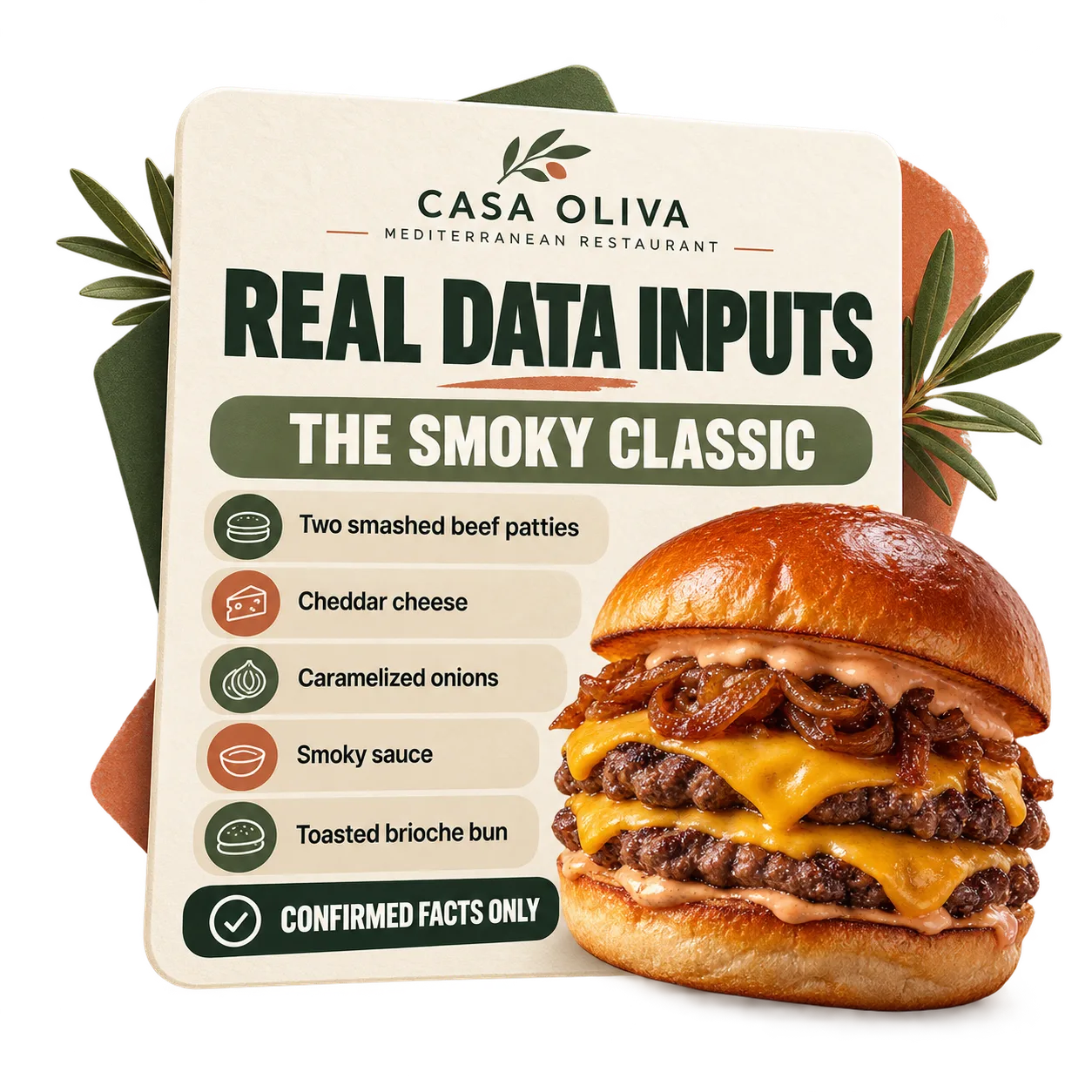
What real information does AI need to write useful restaurant messages?
A reliable marketing message starts with facts. Before asking AI to write, provide the product name, confirmed ingredients, relevant characteristics, and any commercial conditions the restaurant has approved for communication.
It also helps to define the purpose of the message and the restaurant's preferred tone. Describing a dish accurately and writing a more engaging introduction are different creative tasks. Neither gives AI permission to change the product information.
If a detail is missing, AI should not fill the gap with an assumption. Prices, origins, certifications, availability, and promotional claims should only appear when the restaurant has verified them. Otherwise, leave them out or request confirmation.
What AI can suggest — and what it must not invent
Product facts come from the restaurant
Ingredients, menu descriptions, and commercial conditions must be based on confirmed business information. AI can use those facts, not rewrite or supplement them without evidence.
Creativity can offer alternatives
AI can draft headlines, descriptions, and tone variations that express the same verified information in different ways.
Marketing claims need approval
Prices, discounts, availability, sourcing claims, and special promises require human verification. Persuasive copy must still be accurate.
A practical example: creating a restaurant campaign message with AI
Imagine CASA OLIVA wants to create marketing copy for The Smoky Classic, a fictional burger on its menu. The restaurant gives AI a list of confirmed ingredients and requests a short, appealing description that stays true to the product.
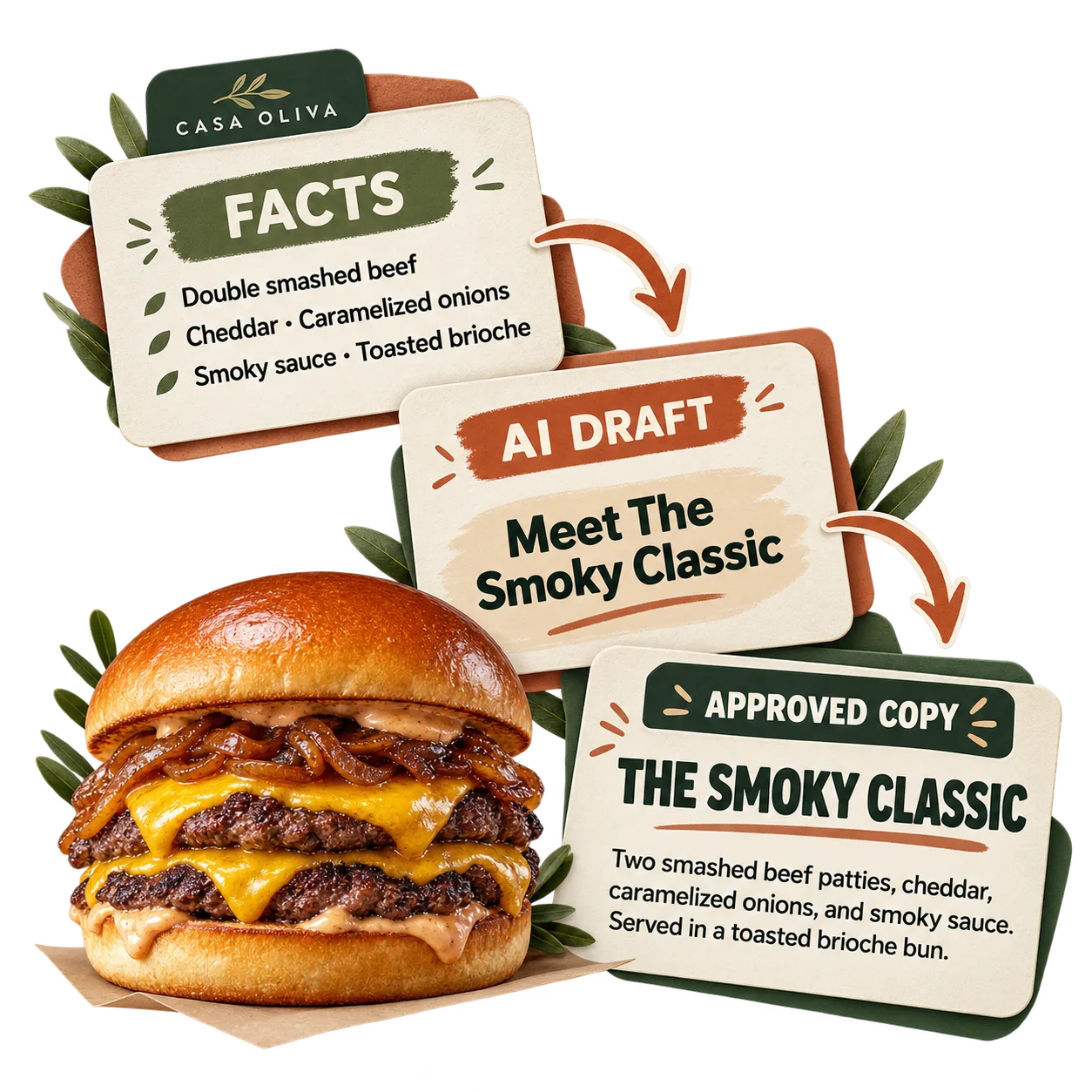
The example follows three stages: the facts supplied by the restaurant, the AI-generated draft, and the final message approved by a person. The focus is on writing accurate, engaging copy rather than designing digital screen promotions.
From The Smoky Classic to an approved marketing message
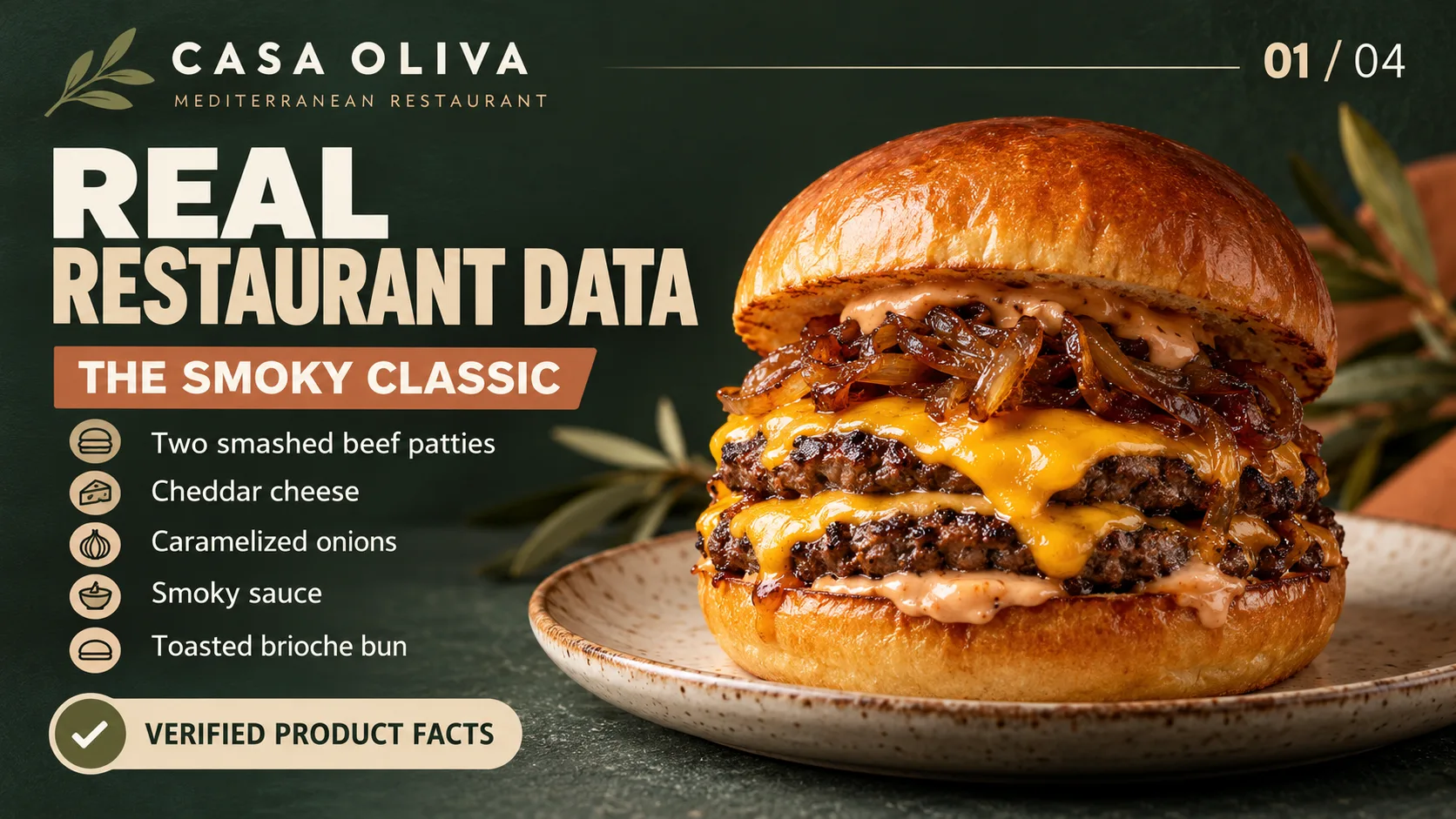
The confirmed ingredients of The Smoky Classic are two smashed beef patties, cheddar cheese, caramelized onions, smoky sauce, and a toasted brioche bun. No price, special origin, promotional offer, or availability claim has been provided.
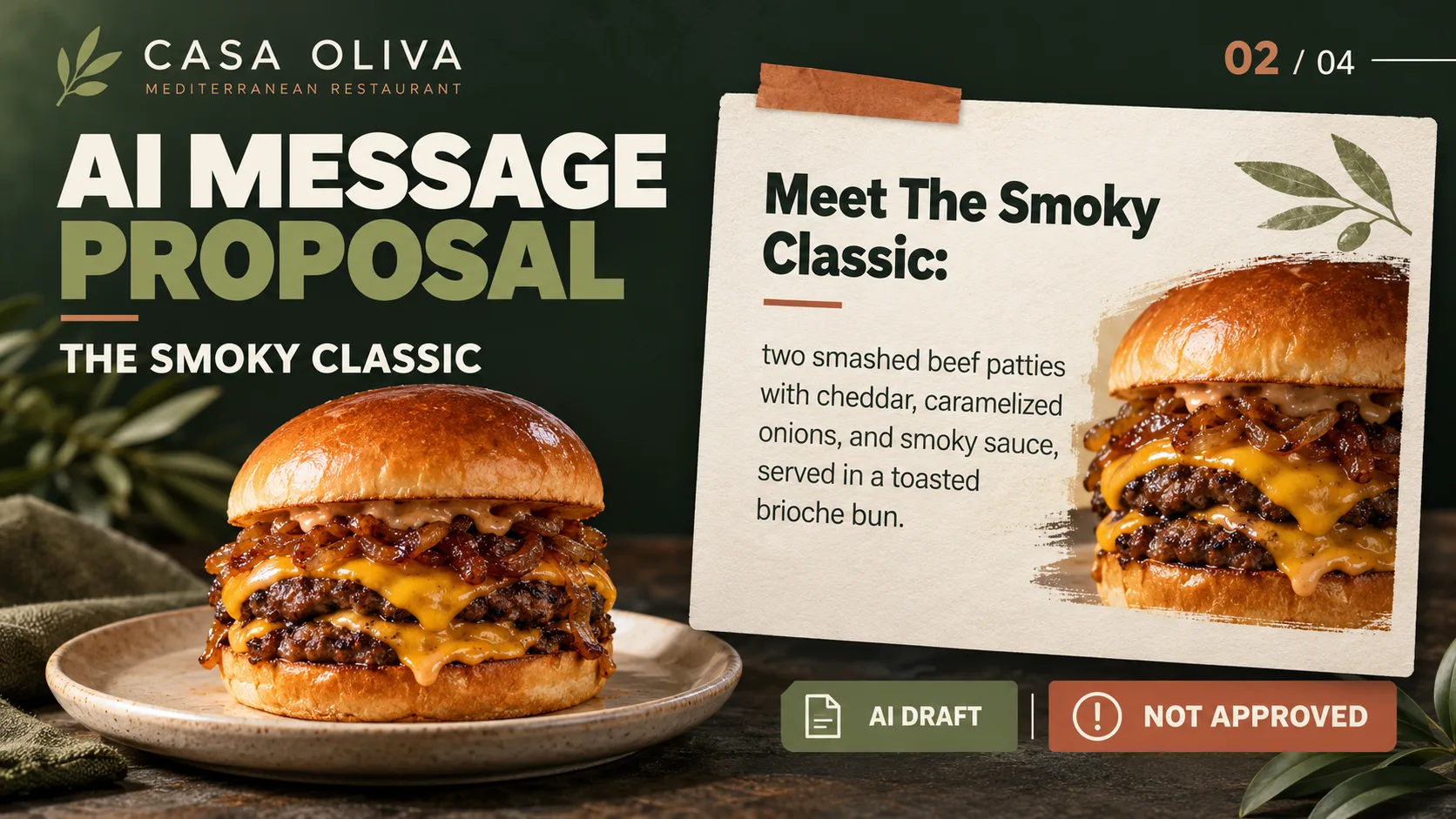
Using only those facts, AI might suggest: “Meet The Smoky Classic: two smashed beef patties with cheddar, caramelized onions, and smoky sauce, served in a toasted brioche bun.” This is a draft, not an approved advertisement.
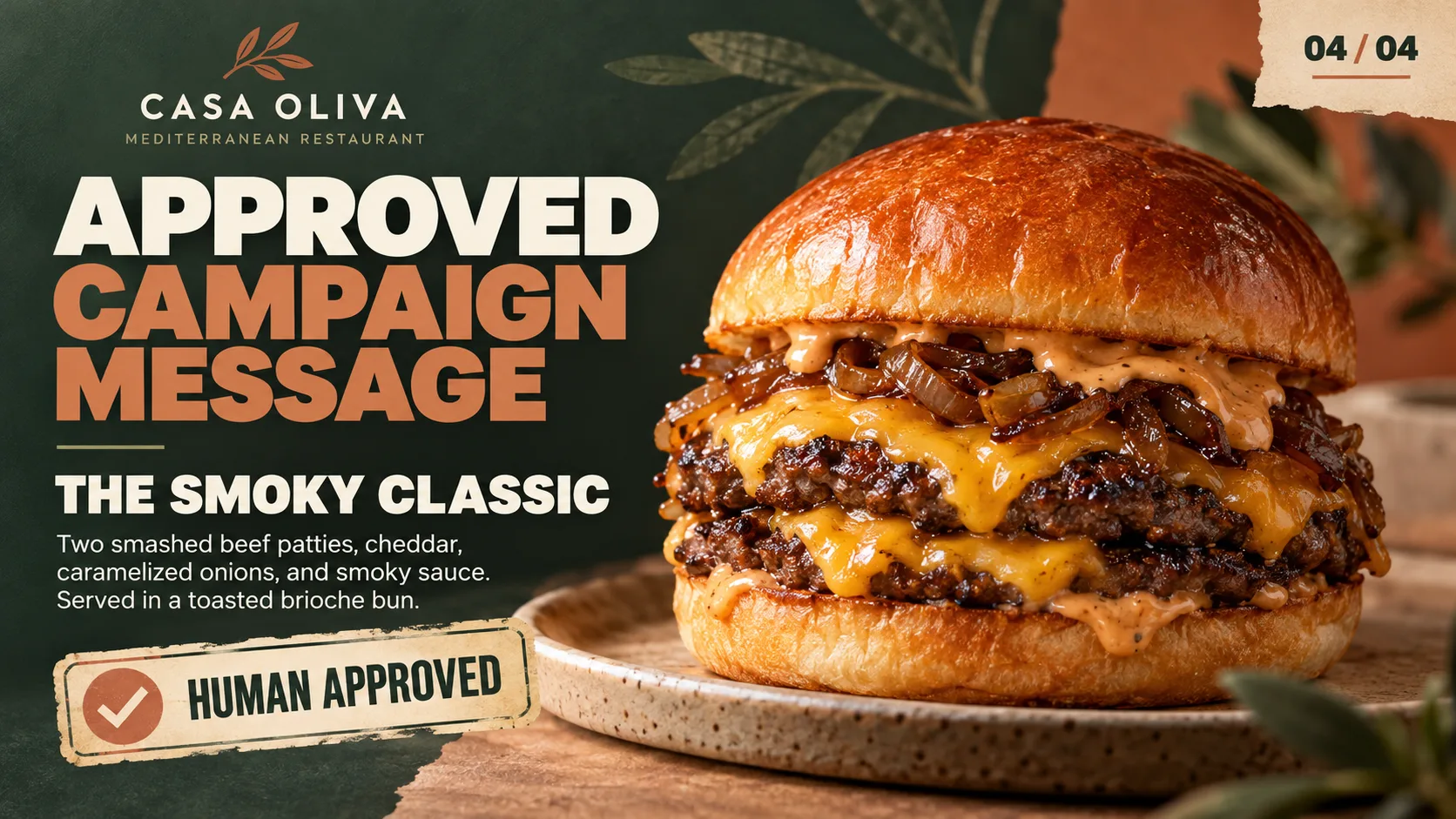
After checking the wording, CASA OLIVA could approve a more direct version: “THE SMOKY CLASSIC. Two smashed beef patties, cheddar, caramelized onions, and smoky sauce. Served in a toasted brioche bun.” The style changes, but the product facts remain the same.
The result is an approved marketing message that the restaurant can use in its communications. This does not imply automatic publication or that any particular platform generated or distributed the campaign.
How to review AI-generated restaurant marketing copy before using it
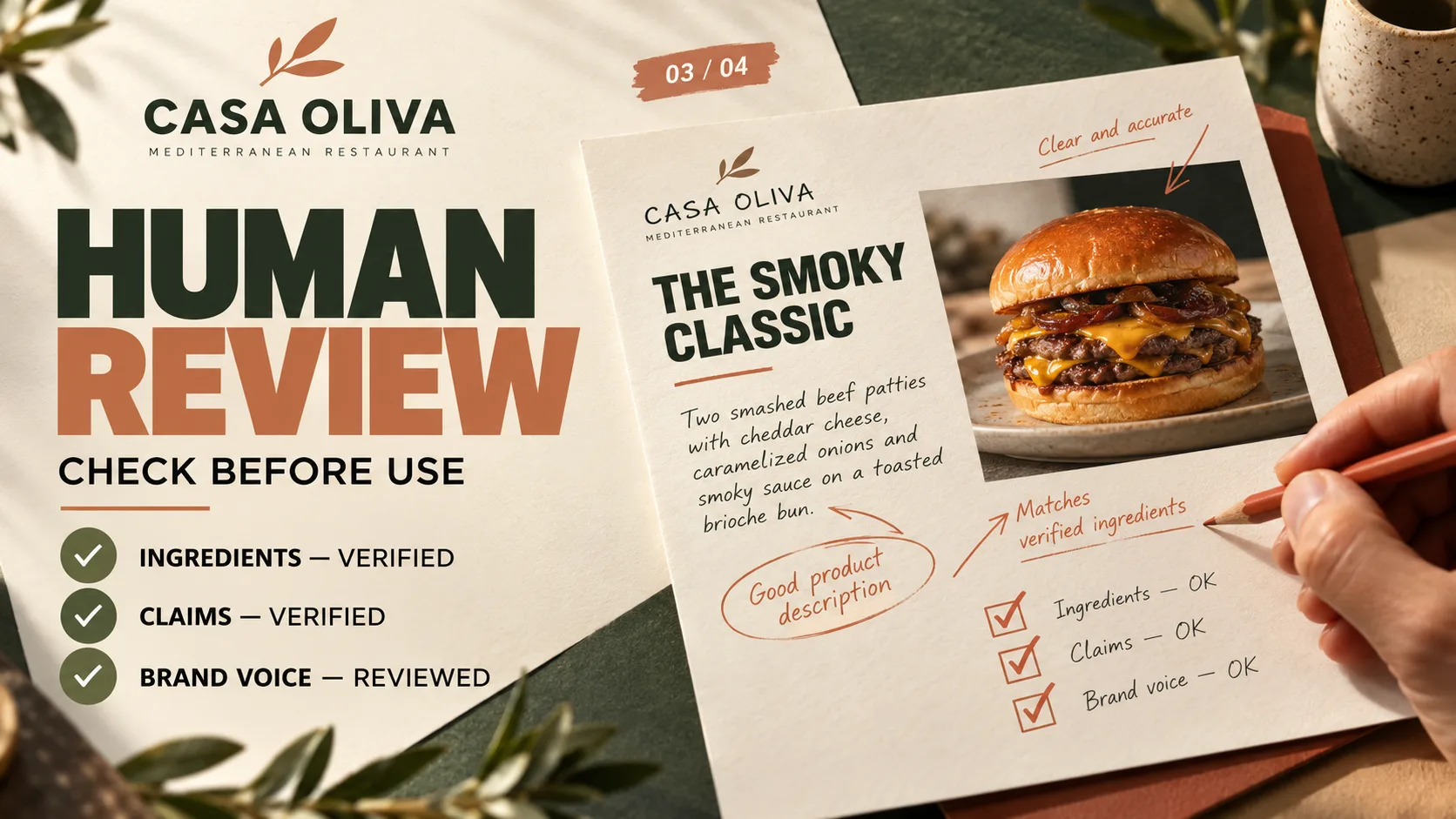
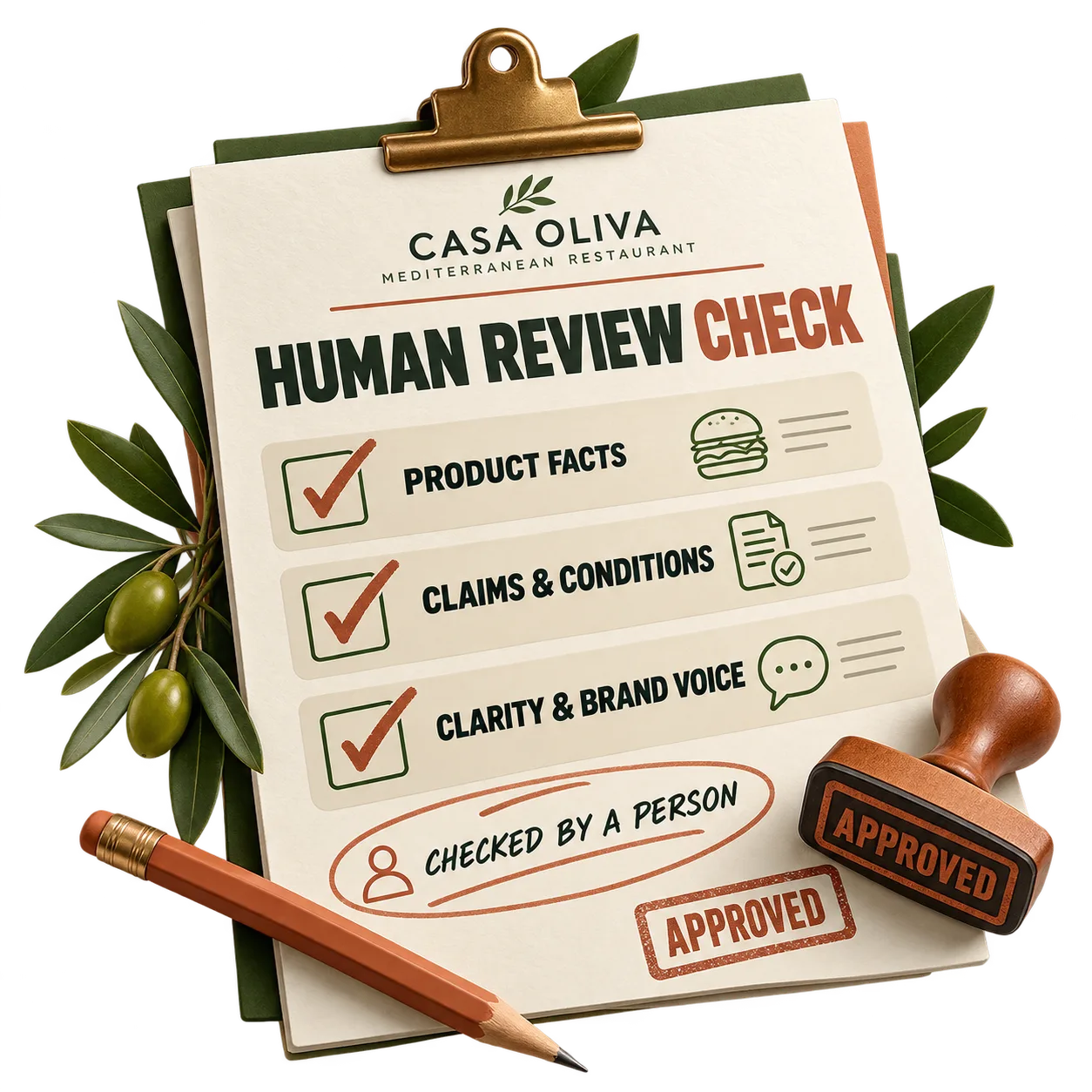
Human review is what turns an AI draft into a message the restaurant can stand behind. Before approval, someone should compare every product statement with the original, verified information.
Check names, ingredients, prices if applicable, commercial conditions, and any promises a customer might interpret as factual. The reviewer should also consider clarity, brand voice, and whether the copy contains exaggerated or ambiguous language.
Any unsupported claim must be removed or verified. Unclear wording should be revised. AI can help produce another draft, but the restaurant remains responsible for approving the final message.
From approved copy to restaurant communication
Once a message has been checked, it can be adapted to the channels the restaurant uses to communicate its menu and products. Writing accurate copy and deciding how to present it are separate tasks: verify the message first, then choose the format.
For restaurants using digital screens, the approved wording can become the starting point for food-focused visual content. Layout, presentation, and screen management belong to the next stage, not to the AI writing process itself.
Once the copy is approved, learn how to highlight a menu item on restaurant screens without confusing message development with visual promotion design.
For other restaurant screen content ideas, explore what to show on restaurant digital screens and choose content that fits your communication goals.
If your next decision concerns visual emphasis, explore whether to lead with the product or the price in a restaurant promotion.
After defining your messages, you can organize them through a restaurant screen content calendar as a separate planning task.
When a campaign includes verified time-sensitive conditions, see how to communicate limited-time offers on restaurant screens without inventing deadlines or urgency.
To explore iMediaGO's solution for communicating content inside your venue, visit digital signage for restaurants and learn about its restaurant-focused applications.
Frequently asked questions about AI for restaurant marketing
Turn approved marketing messages into restaurant communication
Clear, accurate content is the starting point. Discover how iMediaGO approaches digital signage for communicating menus, products, and promotions in restaurants.
Latest articles
Where to Place Digital Signage Screens in a Leisure Centre
Digital Signage for Auto Repair Shops: What to Show at Reception, in Waiting Areas and at Vehicle Collection

Digital signage in education: clear communication for students and visitors
What to Show on Restaurant Screens: 4 Practical Ideas
How to Design an Easy-to-Read Digital Restaurant Menu
Sunday Family Menu: How to Present an Offer Worth Sharing